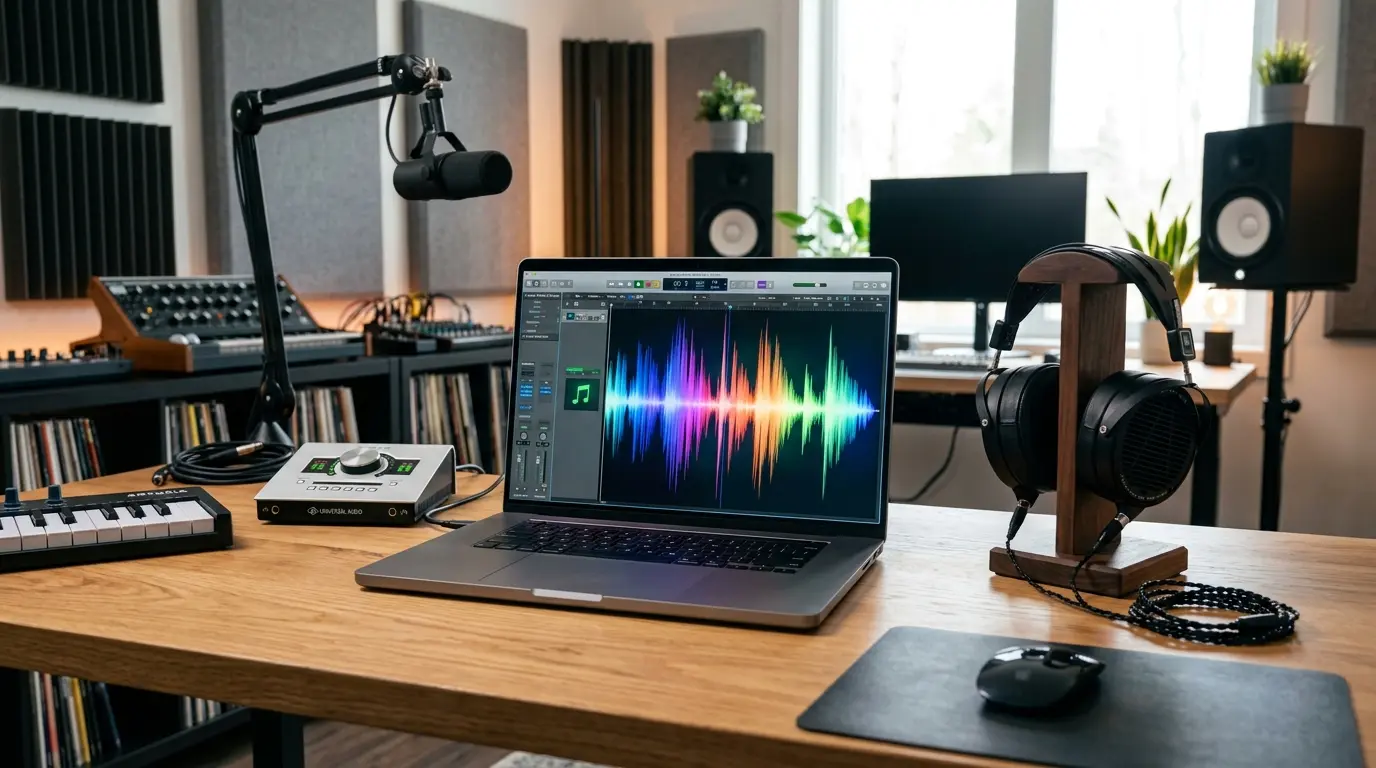
You don’t need a massive studio budget to make incredible music anymore. That barrier is completely gone. Today, artificial intelligence acts as your personal producer, session musician, and sound engineer all wrapped into one.
Maybe you need background music for a podcast. Perhaps you want to drop a full vocal track on Spotify. Or you might just want to mess around with some fun ideas. Whatever the reason, AI music generators can get you there fast.
But not all tools do the same job. Some handle instrumentals perfectly but fail at vocals. Others make great vocals but sound like a cheap keyboard from the 90s. I broke down the top options this year so you know exactly where to spend your time.
1. Suno AI (v5)
Suno is the heavy hitter right now. It takes a simple text prompt and spits out a complete song, vocals included, in under a minute. The audio quality on their latest v5 model is scary good.+2
What makes Suno stand out is its built-in studio feature. You can tweak lyrics, rearrange song sections, and actually edit the flow. It isn’t just a random slot machine for music. You actually get to direct the final product.
- Best for: Making complete songs with realistic vocals.
- Cost: Generous free tier, paid plans around $10/month.

2. Udio
Udio is Suno’s biggest rival. While Suno is built for pure speed, Udio gives you much finer control over the final mix. It excels at layering instruments clearly.
If you want a dense orchestral piece or a complex jazz arrangement, Udio handles the separation of sounds beautifully. The vocals are solid, but the instrumental clarity is where it truly shines. It takes a little more patience to learn, but the payoff is worth it.
- Best for: Complex arrangements and high-quality instrumentals.
- Cost: Free daily credits, paid tiers available.
3. Make Song
Content creators, pay attention to this one. Make Song is engineered specifically for social media. If you want to craft rhythmic, viral-style music for TikTok or Instagram Reels, this is your secret weapon.
It prioritizes catchy hooks that grab attention in the first three seconds. You type in a vibe, and it builds a high-energy loop instantly. You don’t have to worry about muddy audio clashing with your voiceovers, either. The mixes are clean, punchy, and ready to post.
- Best for: Catchy, short-form content loops.
- Cost: Pay-per-use and subscription options.

4. Soundraw
Are you tired of getting hit with copyright strikes on YouTube? Soundraw solves that problem completely. This tool trains its AI strictly on music created by its own team. You own the rights to whatever you generate.
You don’t use text prompts here. Instead, you pick a mood, genre, and tempo. Soundraw builds the track, and you can edit the structure block by block. Need the chorus to drop a little later? Just drag the section over. It is incredibly easy to match the music to your video cuts.
- Best for: Royalty-free video background music.
- Cost: Free trial, subscriptions around $17/month.
5. AIVA
AIVA is built for serious composers. It doesn’t just smash loops together. It actually understands musical theory and builds structured tracks with real emotional arcs.
This tool is a favorite for scoring short films and games. The coolest part? You can export the tracks as MIDI files. This means you can drop the AI’s composition straight into your own digital audio workstation (DAW) and swap out the instruments yourself.
- Best for: Cinematic scores and MIDI export.
- Cost: Free non-commercial tier, pro plans available.

Quick Comparison Guide
| Platform | Top Feature | Ideal User |
|---|---|---|
| Suno AI | Full songs with vocals | Aspiring songwriters |
| Udio | Incredible sound clarity | Audio perfectionists |
| Make Song | Catchy viral hooks | Social media creators |
| Soundraw | Custom track editing | Video editors |
| AIVA | MIDI file exports | Film and game composers |
Frequently Asked Questions
Can I monetize AI-generated music?
Usually, yes, but you must read the rules for each platform. Paid plans on tools like Suno and Soundraw give you full commercial rights. Free plans almost always restrict you to personal use.
Will AI music sound like a robot made it?
Not anymore. A few years ago, the vocals sounded glitchy. Today, top tools generate natural breathing sounds, realistic voice cracks, and proper instrumental layering. Most people cannot tell the difference.
Do I need to know music theory to use these?
Absolutely not. Tools like Make Song and Suno require zero musical background. You just type a description of what you want to hear. The AI handles all the chords and melodies.
Can I edit the songs after they are generated?
It depends on the tool. Soundraw lets you move sections around easily. AIVA lets you export the raw MIDI data for total control. Others just give you a flat audio file.
Is it legal to use these tools?
Yes, it is legal. However, the copyright laws around AI are still shifting. If you plan to sell the music directly, stick to tools like Soundraw that use fully licensed training data to keep yourself safe.
